Therapy Approaches
&
Professional Support
At NeuroHaven Therapies, our practice is grounded in the clinical application of Neuroscience and Interpersonal Neurobiology (IPNB). We understand that healing is not just a cognitive process; it is a neurobiological one. Whether you are navigating complex trauma or seeking support for ADHD and ASD, our goal is to foster neural integration—helping your brain, body, and nervous system work in harmony.
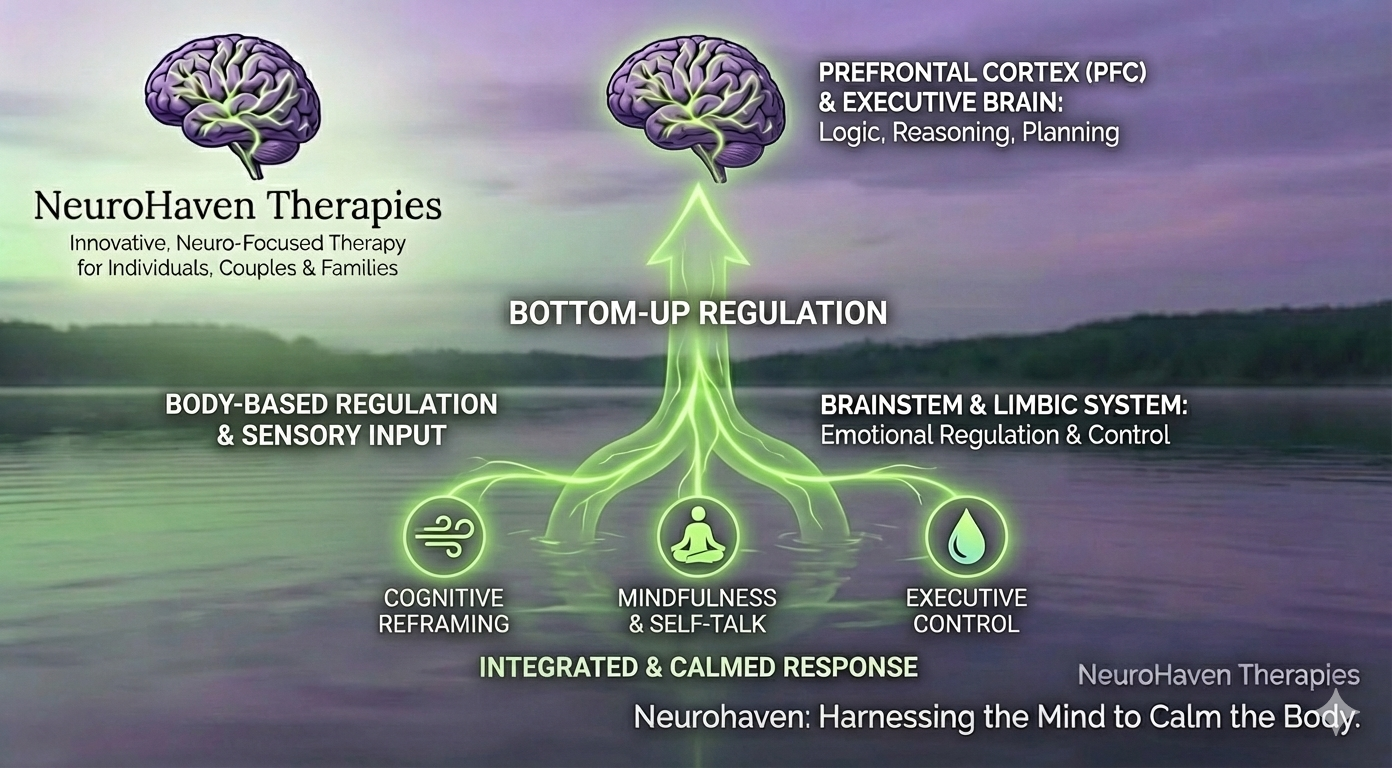
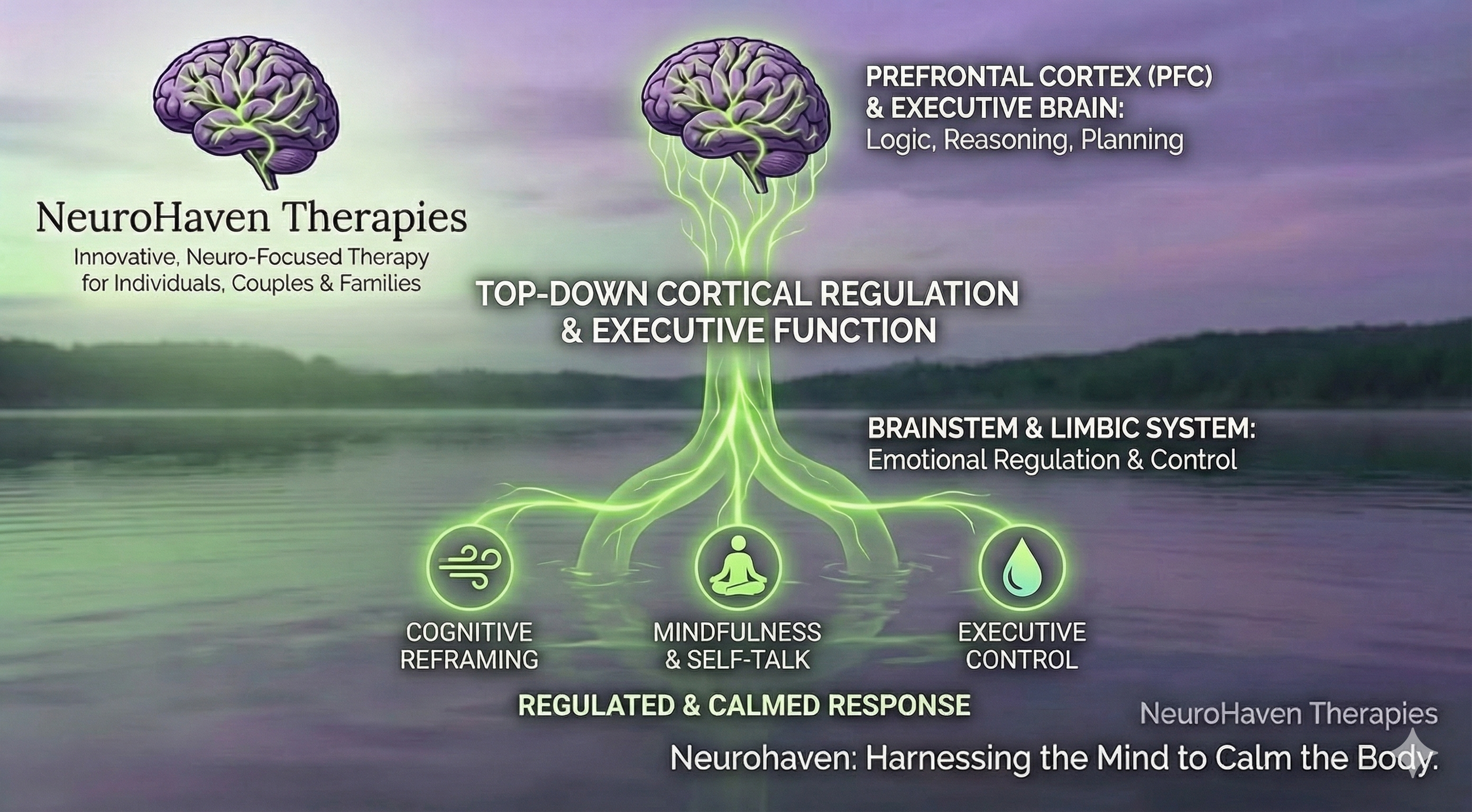
We utilise both "Bottom-Up" (sensory and nervous system) and "Top-Down" (cortical and cognitive) clinical interventions to support lasting change.
1. Nervous System Regulation (Bottom-Up)
Trauma and neurodivergence (ADHD/ASD) often manifest in the lower regions of the brain—the brainstem and limbic system. We use these modalities to regulate the "survival brain" before moving to talk-based therapy.
Polyvagal Theory: We apply the science of safety to help you map your autonomic nervous system. By understanding the "Polyvagal Ladder," we help you transition out of chronic fight/flight or shutdown states and back into social engagement.
Somatic Therapy: Recognising that the body keeps the score, we track physiological markers of stress. This allows us to process traumatic memory held in the subcortical brain, bypass the "speechless terror" of trauma, and restore a sense of physical safety.
Brainspotting: A neuro-biological tool that accesses the midbrain. By finding specific visual "spots" that correlate with internal emotional states, we can process deep-seated trauma and sensory overwhelm that traditional talk therapy cannot reach.
Neuro-Affirming Mindfulness: We teach mindful awareness adapted for the ADHD and ASD brain. We focus on interoceptive awareness—learning to notice internal body cues—to prevent sensory meltdowns and emotional burnout.
2. Cortical Integration & Executive Function (Top-Down)
Once the nervous system is regulated, we can engage the Prefrontal Cortex (the thinking brain). These tools help with planning, emotional regulation, and challenging the narratives that hold you back.
Trauma-Focused & Neuro-Affirming CBT: We reframe "maladaptive" thoughts as survival adaptations. For our ADHD and ASD clients, we don't try to "fix" your wiring; we dismantle the internalised shame (e.g., "I am lazy" or "I am broken") and replace it with strategies that honour your executive functioning style.
Dialectical Behaviour Therapy (DBT) Skills: We provide a clinical framework for managing intense emotionality and Rejection Sensitive Dysphoria (RSD), focusing on distress tolerance and interpersonal boundaries.
Brief Solution-Focused Therapy (BSFT): A goal-oriented approach that leverages your unique neurodivergent strengths (such as pattern recognition or hyper-focus) to navigate current life transitions.
Motivational Interviewing (MI): A collaborative clinical method used to resolve ambivalence and strengthen the neural pathways associated with self-directed change.
3. Neuro-Developmental Support (Children & Families)
We specialise in the neurobiology of play and attachment, providing a safe clinical container for ADHD and Autistic young people.
Neuro-Affirming Play Therapy: Play is the child’s primary language and is essential for neural development. Our playroom allows ASD and ADHD children to process trauma and social stress through sensory-rich, child-led interaction, avoiding the pressure of neurotypical social performance.
Adolescent Counselling: We support teens in the vital task of identity formation. We focus on self-advocacy for late-diagnosed ADHD/ASD and provide tools for managing the sensory and social demands of the adolescent brain.
Attachment-Focused Family Therapy: We move families away from "behaviour management" and toward co-regulation. We help parents understand the neuro-biological needs behind their child's distress, repairing attachment ruptures and fostering family resilience.
4. Interpersonal Neurobiology (IPNB) & Integration
IPNB is the "lens" through which we view all clinical work. It posits that the mind is a process that regulates the flow of energy and information through our neural circuits and our relationships.
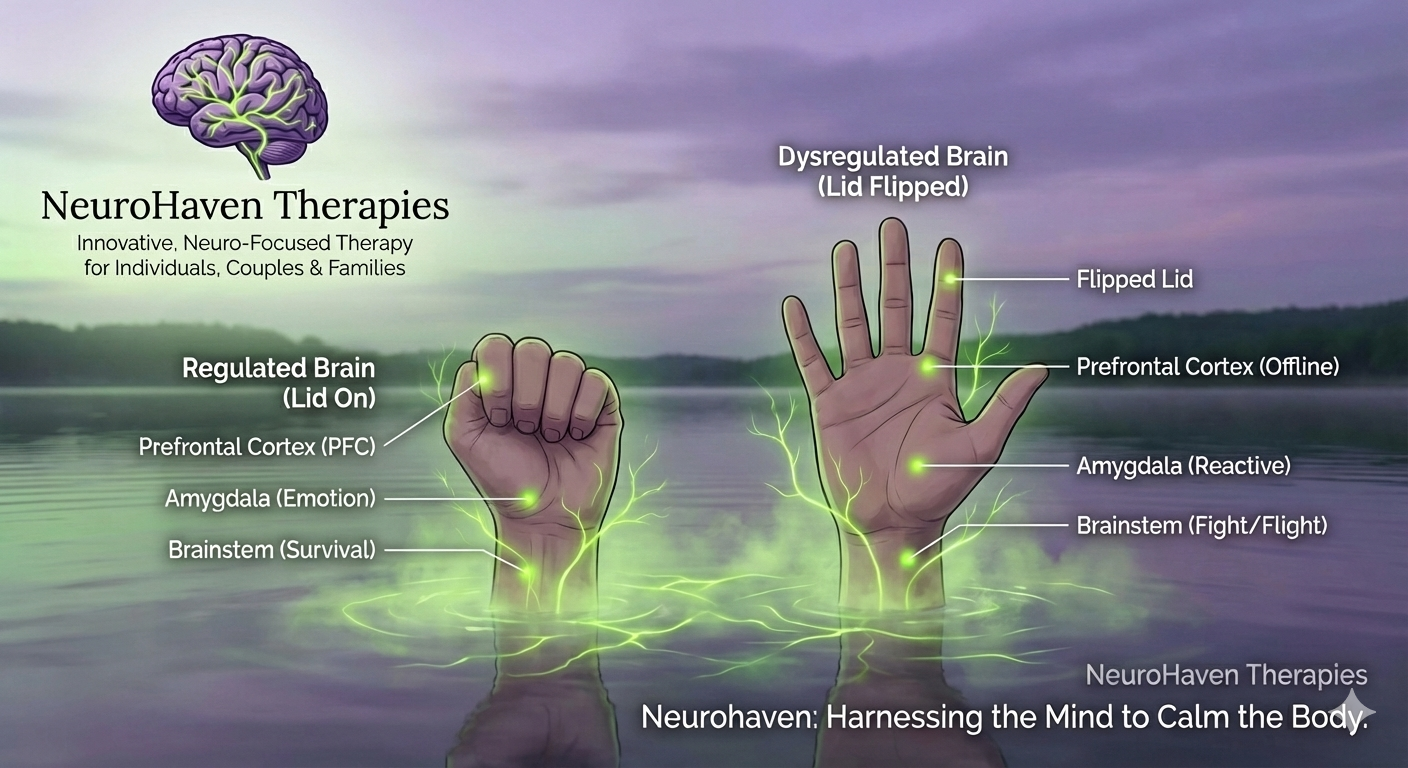
The "Flipped Lid" Model: We use Dr Dan Siegel’s Hand Model of the Brain to teach you how the Prefrontal Cortex and Amygdala interact. Understanding this helps you recognise when you have "flipped your lid" and provides a roadmap for bringing your "Thinking Brain" back online.
Neuro-Affirming Couples Therapy: We help couples understand each other’s unique neurology. We focus on neural co-regulation, teaching partners how to act as a "secure base" for one another’s nervous systems.
5. Clinical Supervision & Reflective Practice
As Accredited Mental Health Social Workers (AMHSW) with over 15 years of experience, we provide clinical supervision grounded in reflective practice and the neuroscience of professional sustainability.
Our Supervision Focus:
Self-of-the-Therapist: Using IPNB to explore the clinician’s own neural responses and countertransference in complex trauma work.
Neuro-Affirming Supervision: Supporting clinicians to pivot away from pathology-based models when working with ASD and ADHD populations.
AMHSW Accreditation: Guided support for Social Workers navigating the clinical requirements of Medicare and AASW standards.
Vicarious Trauma Prevention: Creating a "neuro-biological safety net" for clinicians to process high-acuity caseloads and prevent burnout.